3.55 kg to lbs: A Step-by-Step Guide to Accurate Conversion
Converting kilograms (kg) to pounds (lbs) is a common task with practical applications across various fields. This guide provides a clear, step-by-step method for accurately converting 3.55 kg to lbs, emphasizing the importance of precision and highlighting potential pitfalls. For more complex conversions, see our lbs to kg converter.
Mass vs. Weight: Clarifying the Terminology
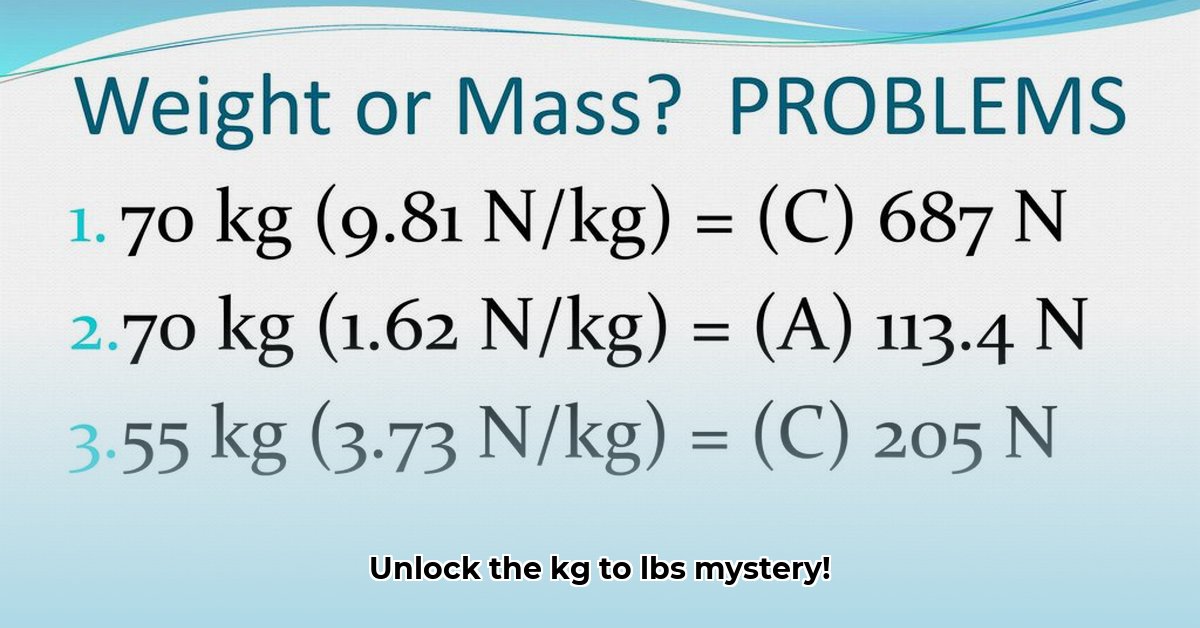
Before beginning the conversion, it's crucial to understand the distinction between mass and weight. Mass (measured in kilograms) represents the amount of matter in an object and remains constant regardless of location. Weight (often measured in pounds), on the other hand, is the force exerted on an object due to gravity. While often used interchangeably in everyday conversation, the distinction is important in scientific contexts. In this conversion, we are dealing with mass.
The Conversion Factor: Understanding the Relationship
The fundamental conversion factor between kilograms and pounds is approximately 2.20462 lbs per 1 kg. This means that one kilogram is equal to roughly 2.20462 pounds. This factor is derived from the precise definitions of the kilogram and pound units within their respective measurement systems. Why isn't it exactly 2.2? Historical inconsistencies between the metric and imperial systems are the root cause.
Step-by-Step Conversion of 3.55 kg
To convert 3.55 kg to pounds, follow these steps:
- Identify the Conversion Factor: 1 kg ≈ 2.20462 lbs
- Set up the Equation: Pounds = Kilograms × Conversion Factor
- Substitute Values: Pounds = 3.55 kg × 2.20462 lbs/kg
- Calculate: Pounds ≈ 7.82641 lbs
Rounding and Precision: Context Matters
The result of the calculation (7.82641 lbs) contains more decimal places than are typically needed. The appropriate level of rounding depends on the context. For most everyday purposes, rounding to 7.83 lbs is sufficiently accurate. However, in scientific or engineering applications, retaining more decimal places is necessary for precision. Rounding too aggressively can lead to significant errors, particularly in cumulative calculations.
Real-World Applications: Why Accurate Conversion Is Crucial
Accurate conversion is not just an academic exercise; it is vital for various applications:
- Culinary Arts: Precise conversions are essential when following recipes from different countries, ensuring accurate ingredient proportions.
- Shipping and Logistics: Incorrect weight calculations can result in increased shipping costs or delays. Accurate weight measurement is critical for efficient logistics.
- Scientific Research: In research, precise measurements are fundamental for reproducible results, accurate data analysis, and valid conclusions. Inaccurate unit conversions can negate the validity of experimental findings.
Potential Pitfalls and Error Minimization
Several factors can lead to inaccuracies in kilogram-to-pound conversions:
- Incorrect Conversion Factor: Using an inaccurate conversion factor (e.g., 2.2 instead of 2.20462) introduces significant errors.
- Premature Rounding: Rounding off intermediate results prematurely can also accumulate errors.
- Confusing Mass and Weight: Remember, we are converting mass, not weight. This distinction is crucial for accurate calculations.
Conclusion: Mastering the KG to LBS Conversion
Converting 3.55 kg to approximately 7.83 lbs is straightforward once the underlying principles are understood. However, remember that precision is paramount. The appropriate level of accuracy depends entirely on the context of the conversion. Always prioritize using the most precise conversion factor available and round your final answer only after all calculations are complete.